
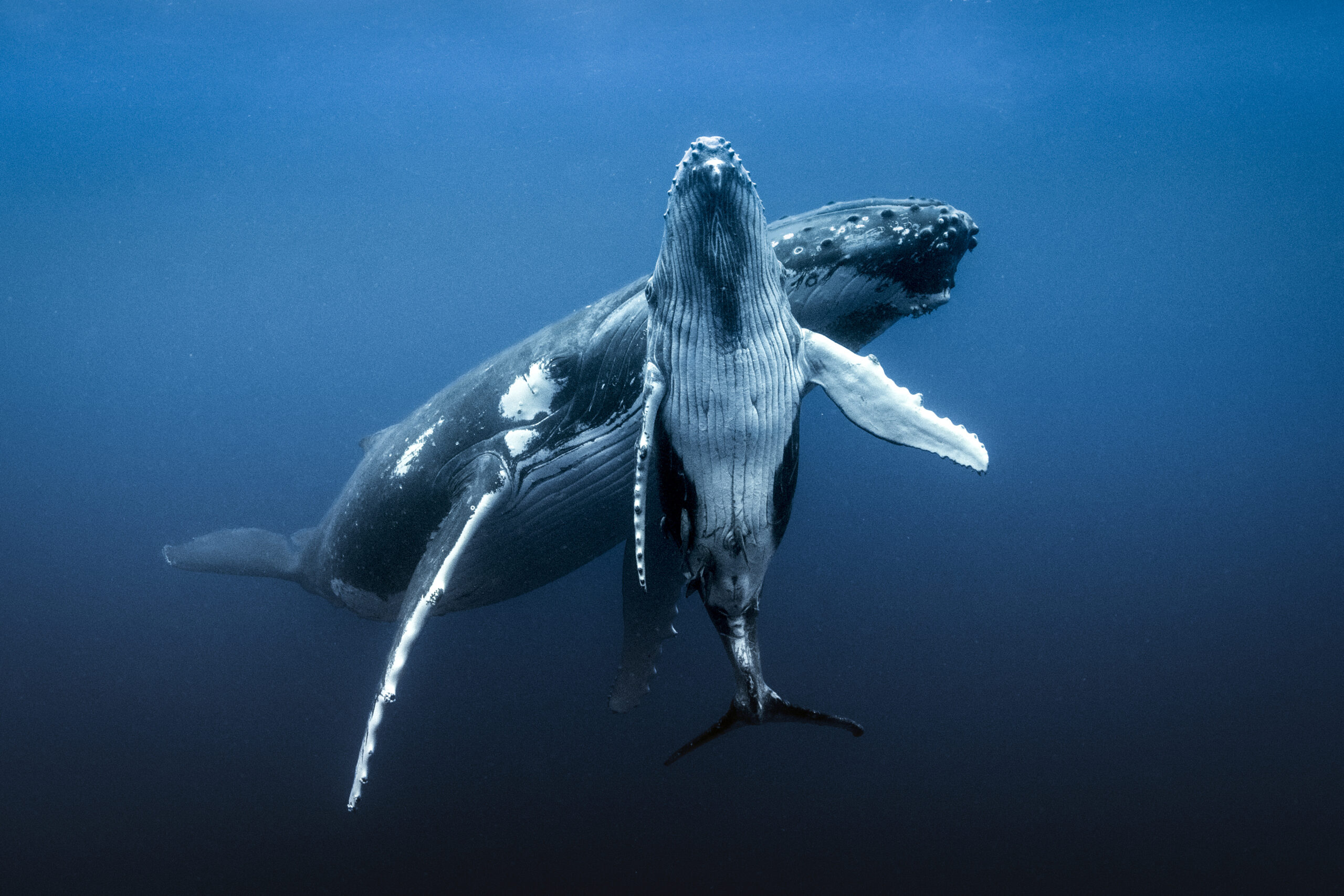
If you are looking for the premier whale Spot in Baja California Sur, you have found it. This region is a true paradise for nature lovers, offering a front-row seat to one of the most incredible migrations on the planet.
Every year, thousands of travelers visit the shores of San José del Cabo to witness the stunning displays of these massive sea creatures in their natural habitat. In this article, we will introduce you to the three majestic species you can encounter: the Gray Whale, the Humpback Whale, and the legendary Blue Whale.
The best time for sightings is typically from December to April when they migrate into warmer waters to breed and play. After your adventure, don’t forget to head to Símaruba to enjoy a refreshing drink or a delicious meal while you reflect on the magic of the ocean.
The Ultimate Whale Spot in Baja California Sur: A Guide to the Ocean’s Giants
Baja California Sur is a true haven for nature enthusiasts, especially those fascinated by whale watching. Each year, thousands of visitors flock to the picturesque shores of San José del Cabo to witness the majestic spectacle of these ocean giants.
For many travelers, this region is known as the ultimate whale Spot in Baja California Sur, offering a unique front-row seat to one of nature’s most impressive events. The region’s warm waters serve as a critical breeding ground for various whale species, making it an ideal destination for unforgettable marine adventures.
From the gentle gray whale to the acrobatic humpback whale and the enormous blue whale, there’s a diverse array of marine life to encounter. Finding the perfect whale Spot in Baja California Sur ensures that you can see these creatures behaving naturally in their own environment.
For those eager to enhance their experience, a visit to Símaruba offers a perfect opportunity to relax with a refreshing drink or savor delicious local dishes while soaking in the stunning coastal views. Whether you are a seasoned whale watcher or a first-timer, Baja California Sur promises an extraordinary adventure filled with breathtaking sights and memorable moments.
1. Gray Whale: The Gentle Giant of the Sea
The gray whale is one of the most iconic species you can find in the region. Known for its distinct color and long body, which can reach up to 15 meters in length, this species is famous for its annual migrations from its breeding grounds to the warm local waters.
If you are searching for the ultimate whale Spot in Baja California Sur, Magdalena Bay is where the magic happens. The best time to observe these whales is between December and April, when they migrate to the peninsula to breed and give birth.
During this peak period, they are often seen close to the shore, making them an easy and accessible sight for tourists. This proximity makes every whale Spot in Baja California Sur along the coast a potential place for a life-changing encounter.
Gray whales are particularly known for their friendly and curious behavior, often approaching boats with ease. This social nature makes watching them an incredible experience that you simply cannot miss while visiting.
They are currently classified as an endangered species, so each sighting is especially meaningful. Their unique journey and gentle nature have made them a favorite, offering a rare chance to connect with the true beauty of marine life.
Characteristics of the Gray Whale
The gray whale is a remarkable species, easily identified by its mottled gray color and robust body, which can reach lengths of up to 15 meters. These gentle giants are the main attraction for anyone visiting a whale Spot in Baja California Sur, offering a truly majestic sight.
They are famous for their long migrations, traveling from their breeding grounds in the warm local waters to feeding areas in the cold Arctic regions. Their unique skin often hosts barnacles and whale lice, which gives them a distinctive and rugged appearance.
Gray whales are also known for their friendly demeanor; they often approach boats, allowing for close encounters with observers. Unlike many other species, they do not have dorsal fins, a feature that adds to their unique and recognizable silhouette in the water.
Their baleen plates allow them to filter feed on small organisms like amphipods from the ocean floor. Finding the right whale Spot in Baja California Sur provides a unique opportunity to witness their incredible adaptability to the marine environment firsthand.
During the mating and calving season, mothers and their calves can be seen playing near the coast. This endearing behavior emphasizes their nurturing nature, making gray whales a favorite among those fortunate enough to witness them in their natural habitat.
Best Time to Spot Gray Whales
The ideal time to observe gray whales in the region is from December to April. During these months, they make their annual migration from the chilly waters of the Arctic to the warmer lagoons of the Baja Peninsula for mating and calving.
Choosing the right whale Spot in Baja California Sur during this peak season is essential for a successful adventure. Because the whales are often seen close to the shore, the coastline provides excellent viewing opportunities for tourists of all ages.
Many specialized tours operate during this season, offering experienced guides who can enhance your experience. These experts share unique insights about these magnificent creatures while ensuring you are at the perfect whale Spot in Baja California Sur at the right moment.
If you’re lucky, you might witness mothers nurturing their calves, a truly heartwarming sight that captures the beauty of nature. This connection between mother and calf is one of the most memorable moments you can experience in the waters of the peninsula.
Fun Facts About Gray Whales
Gray whales are fascinating creatures with some unique traits. One interesting fact is that they can migrate over 10,000 miles each year, making one of the longest migrations of any mammal. Not only are they known for their impressive journeys, but gray whales also have a special relationship with the ocean floor; they often feed by rolling on their sides and scooping up sediment to find crustaceans and small organisms.
Additionally, these whales are known for their social behavior, often seen interacting with each other and even approaching boats, which allows for incredible up-close encounters for observers. Their skin is often covered in barnacles and whale lice, which creates a unique pattern on their bodies, making each individual easily identifiable.
Lastly, gray whales have a remarkable vocalization range, using sounds to communicate with each other during their long migrations.
2. Humpback Whale: The Acrobatic Performer
The humpback whale is a captivating sight in the region, known for its impressive size and remarkable acrobatics. These giants can grow up to 16 meters long and are easily identified by their long pectoral fins and distinctive hump-shaped back.
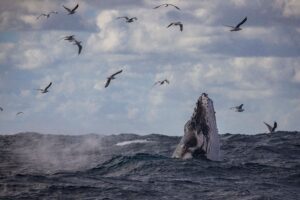
If you are looking for an active whale Spot in Baja California Sur, this is the species to watch. They are famous for their playful behavior, including breaching, tail-slapping, and spy-hopping, all of which create a breathtaking display that delights onlookers.
Humpback whale exhaling and performing a head lunge with seagulls looking for a feed
In the local waters, the best time to spot humpback whales is between December and April. During this period, they migrate from their feeding grounds in the Arctic to the warmer waters of Mexico to mate and give birth.
Tourists often have the chance to witness these majestic creatures swimming alongside their calves, making for a truly memorable experience. Finding a great whale Spot in Baja California Sur during these months practically guarantees an unforgettable show of nature.
Humpback whales are also known for their complex songs, which can last for up to 20 minutes and travel through the water for miles. These songs play a crucial role in their mating rituals and social interactions, adding a mysterious layer to their presence.
Observing a humpback whale in its natural habitat is not just about the visuals; it’s about experiencing the rich sounds of the ocean as well. It’s a complete sensory journey that every nature lover should experience at least once.
Characteristics of the Humpback Whale
The humpback whale is known for its striking features, including long pectoral fins and a distinctive hump on its back. These whales can grow up to 16 meters in length and are world-famous for their acrobatic displays that thrill everyone at a whale Spot in Baja California Sur.
They often breach the surface, performing spectacular jumps and spins that leave observers in awe. Their unique coloration—with dark blue or gray bodies adorned with white markings on their fins and tails—makes them visually stunning against the deep ocean backdrop.
One of the most fascinating aspects of humpback whales is their vocalizations. They are known for their complex songs, which can last for up to 20 minutes and travel great distances underwater. These songs are believed to play a vital role in both communication and mating rituals.
Humpback whales are also highly social creatures. They are often seen traveling in groups or mother-calf pairs, which adds an extra layer of excitement for those visiting a whale Spot in Baja California Sur during the peak season.
During the breeding season, these giants migrate thousands of miles from their feeding grounds in colder waters to warmer regions. This incredible journey highlights their adaptability and reminds us of the importance of conservation efforts to protect their natural habitats.
Best Time to Spot Humpback Whales
The optimal time to spot humpback whales in the region is from December to April. During these months, these magnificent creatures migrate from their feeding grounds in the cold waters of the Arctic to the warmer, sheltered bays of the peninsula.
This long journey is crucial for their breeding and calving, as they seek the safety of the local coastline. Finding a premier whale Spot in Baja California Sur during this window practically guarantees a spectacular show of nature.
Many specialized tours operate during this peak season, providing visitors a great chance to see these acrobatic giants as they breach the surface and perform flips. If you are at the right whale Spot in Baja California Sur, you might even have the chance to hear them sing their haunting and beautiful songs.
The calm waters and clear skies of this time of year make for perfect viewing conditions. This allows for truly memorable encounters with these stunning mammals in an environment that feels both safe and awe-inspiring.
Fun Facts About Humpback Whales
Humpback whales are known for their incredible acrobatics, often breaching the surface and performing spectacular flips and spins. These graceful giants can weigh up to 50 tons and grow up to 16 meters long. One of the most fascinating aspects of humpback whales is their complex songs, which can last for up to 20 minutes and be heard over great distances underwater.
Each population has its own unique song, and these songs can change over time, showcasing their dynamic communication. Humpback whales are also known for their long migrations, traveling up to 5,000 kilometers from their feeding grounds in the Arctic to warmer breeding areas in Baja California Sur. This remarkable journey highlights their resilience and adaptability in the face of environmental changes.
3. Blue Whale: The Largest Animal on Earth
The blue whale is not just the largest animal alive today; it is the largest animal to have ever existed on Earth. Reaching lengths of up to 100 feet (30 meters) and weighing as much as 200 tons, this magnificent creature is a true giant of the ocean. 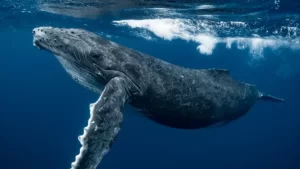
Finding a whale Spot in Baja California Sur for this species is a rare and humbling experience. Its long, streamlined body, featuring a blue-gray color with lighter spots, makes it an awe-inspiring sight for anyone lucky enough to catch a glimpse.
In the region, sightings of blue whales are less common than those of gray or humpback whales. However, they can still be spotted during the same migratory season, which runs from December to April.
They often prefer deeper waters, so boaters may need to venture a bit further offshore for a chance to see these majestic beings. Choosing a specialized whale Spot in Baja California Sur with experienced captains is key to spotting them swimming gracefully through the deep blue.
Despite its enormous size, the blue whale primarily feeds on tiny shrimp-like creatures called krill. During feeding season, a single whale can consume up to 4 tons of krill each day, using its baleen plates as a remarkable filtering adaptation.
Sadly, blue whales faced severe hunting pressures in the past, leading to a drastic decline in their population. Today, conservation efforts are ongoing to protect these gentle giants, making every encounter a special and meaningful experience in their natural habitat.
Characteristics of the Blue Whale
The blue whale is the largest animal ever known to have existed on Earth, reaching astounding lengths of up to 100 feet (30 meters) and weighing as much as 200 tons. Its long, streamlined body is a striking blue-gray color, often mottled with lighter spots. One of the most impressive features of the blue whale is its heart, which can weigh as much as a small car. These majestic creatures have a flat, U-shaped head and a prominent ridge running from their blowhole to the top of their snout.
Blue whales are filter feeders, primarily consuming krill, tiny shrimp-like crustaceans that they filter from the water using their baleen plates. During feeding season, a single blue whale can eat as much as 4 tons of krill a day. Despite their massive size, blue whales are known for their grace as they glide through the water. They can be spotted alone or in small groups, and their distinctive, loud vocalizations can be heard over long distances, making them one of the loudest animals in the ocean.
Their striking appearance and gentle nature make them a fascinating sight for whale watchers, although their populations have significantly declined due to past whaling practices.
Best Time to Spot Blue Whales
The best time to spot blue whales in the region is during the peak of the whale watching season, which runs from December to April. While they are more elusive than other species, finding the right whale Spot in Baja California Sur during this window can reward you with a glimpse of the ocean’s biggest inhabitant.
Although sightings of blue whales are less frequent compared to gray and humpback whales, they can still be spotted occasionally in the waters off the coast during this period. The whales typically migrate to these warm waters to feed and breed, seeking the rich nutrients of the peninsula.
If you’re aiming for a chance to see these magnificent creatures, consider planning your trip for February or March, when sightings are more likely. This is the prime window to visit a specialized whale Spot in Baja California Sur for a successful and awe-inspiring expedition.
Keep your camera ready! These gentle giants can reach lengths of up to 30 meters and are a breathtaking sight against the deep blue backdrop of the Pacific Ocean. Every second spent observing them is a powerful reminder of the ocean’s immense scale and beauty.
Fun Facts About Blue Whales
Blue whales are not just the largest animals on Earth; they are also among the loudest. Their calls can reach up to 188 decibels, which can be heard over vast distances underwater. These magnificent creatures have a heart the size of a small car, weighing around 400 pounds, and their tongues can weigh as much as an elephant.
Interestingly, blue whales can consume up to 4 tons of krill a day during feeding season, using their baleen plates to filter these tiny crustaceans from the water. Despite their massive size, blue whales have few natural predators, primarily due to their sheer size and strength.
Relaxing at Símaruba After Whale Watching
After an exhilarating day at your favorite whale Spot in Baja California Sur, there’s no better way to unwind than at Símaruba. This inviting spot offers a perfect blend of relaxation and local flavor, tailored for those who want to end their adventure on a high note.
Picture yourself enjoying a refreshing cocktail or a cold beer as you take in the breathtaking views of the ocean. The atmosphere is designed to help you decompress while still feeling connected to the beauty of the sea.
Whether you opt for a classic margarita or a tropical fruit smoothie, the drinks here are designed to complement the stunning sunsets that illuminate the sky. Every sip is a tribute to the vibrant colors of the Pacific.
Pair your drink with a delicious dish like fresh ceviche, made with the local catch of the day, for a true taste of the region. The combination of good food, great drinks, and the sound of the waves creates a serene atmosphere.
It is truly the ideal way to reflect on the day’s adventures with friends or family after leaving the best whale Spot in Baja California Sur. You’ll find that the magic of the whales is only matched by the tranquility of this rooftop experience.
Experience the Natural Wonders of Baja California Sur
Baja California Sur is a breathtaking destination for nature lovers, especially those keen on whale watching. The waters here are alive with the presence of majestic whales, making this the perfect whale Spot in Baja California Sur for unforgettable experiences.
As you embark on your adventure, you’ll find yourself surrounded by stunning landscapes and the soothing sounds of the ocean. With each sighting, you connect with these incredible creatures in their natural habitat.
The region’s unique geographical features, including deep bays and sheltered coves, create ideal conditions for whales to thrive. Whether you’re on a boat or viewing from the shore, the thrill of seeing a whale breach or spout water is unmatched.
The sense of wonder is amplified when you realize that you are witnessing a natural phenomenon that has captivated people for centuries. It truly makes every whale Spot in Baja California Sur along the coast a place of pure magic.
Don’t forget to bring your camera to capture these moments, but also take time to soak in the beauty around you. The sunsets over the ocean can be just as mesmerizing as the whales themselves.
After a day on the water, consider visiting places like Símaruba to unwind with a refreshing drink or a local dish. It’s the perfect way to reflect on your remarkable encounters with the ocean’s giants while enjoying the best atmosphere in San José.
Frequently Asked Questions
1. What are the three whale species found in Baja California Sur?
The three main species you can observe are the Gray Whale, the Humpback Whale, and the Blue Whale. Each offers a unique experience for nature lovers.
2. When is the best time to see whales in the region?
The optimal season is typically from December to April, when these magnificent creatures migrate to warmer waters for breeding and calving.
3. What is the best whale Spot in Baja California Sur to visit?
While there are many great locations, the most popular spots include Magdalena Bay for Gray Whales and Cabo San Lucas for acrobatic Humpbacks.
4. How do I know if I’m seeing a Gray Whale?
You can identify a Gray Whale by its mottled gray skin, the presence of barnacle patches, and its unique spouting behavior, which is distinct from other species.
5. Are there guided tours available to visit a whale Spot in Baja California Sur?
Yes, there are many professional guided tours available. These experts ensure a respectful distance from the animals while providing the best opportunities for sightings.
TL;DR Baja California Sur is a whale watching paradise featuring three spectacular species: the Gray Whale, known for its friendly demeanor and migratory behavior; the Humpback Whale, famous for its acrobatics and complex songs; and the Blue Whale, the largest animal on Earth, primarily feeding on krill. The best time to spot these whales is from December to April. After an exciting day of whale watching, relax at Símaruba with a refreshing drink or delicious meal.